
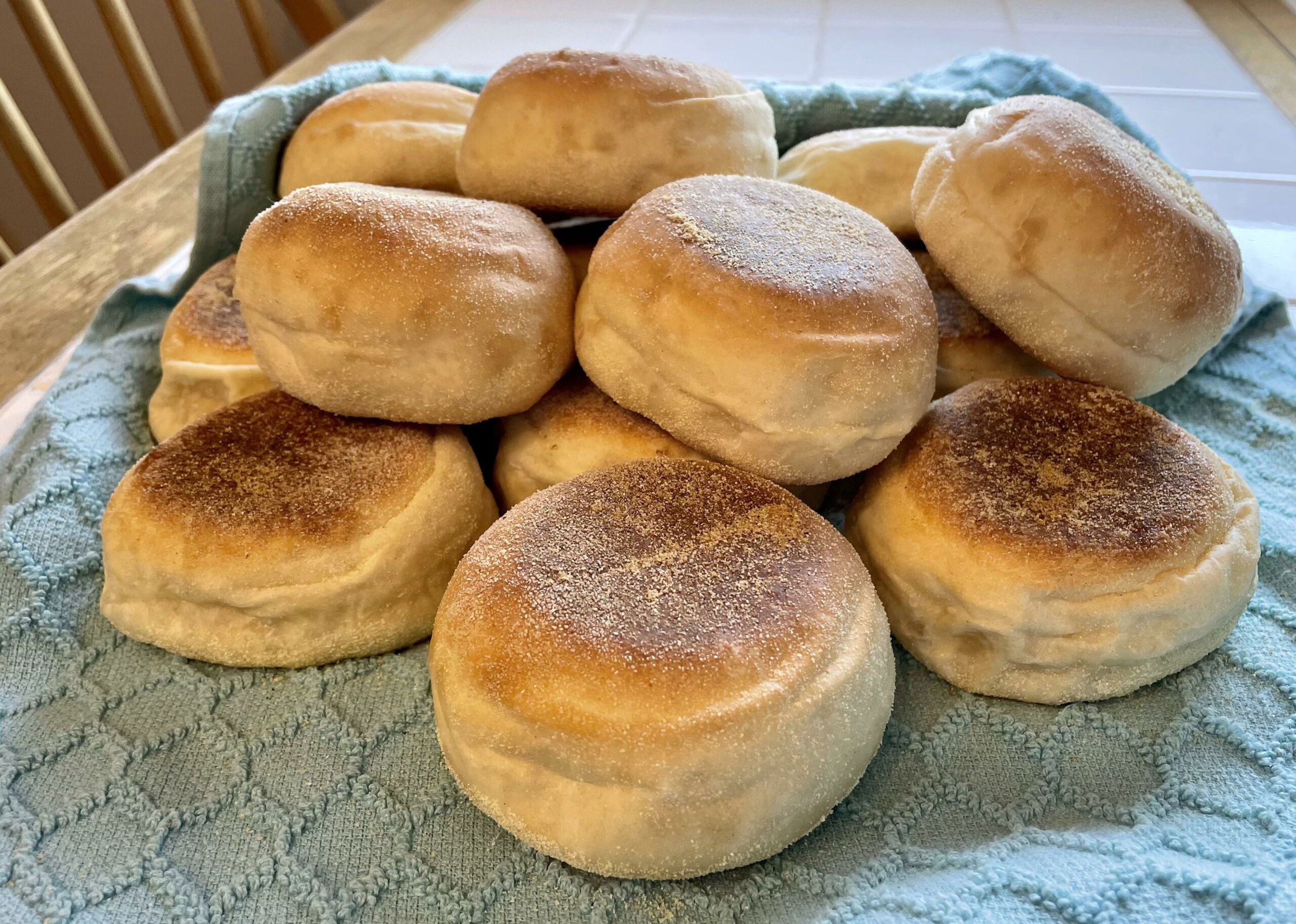
People say once you try homemade muffins, they automatically and forever ruin store-bought ones for you. It’s true.
English muffins aren’t actually “muffins” in the American sense…. they’re closer to small, yeasted flatbreads.
The name comes from the late 19th century, when English immigrant baker Samuel Bath Thomas (of Thomas’® fame) popularized them in New York City.
I’d tried a few different English muffin recipes before settling on that King Arthur recipe; it works beautifully.
Every one of their bread recipes I have ever followed properly has turned out well. You just can’t go wrong with their recipes.
Why You Should Try This Recipe

This recipe is not intimidating. It is actually easier than making regular homemade bread.
It is as simple as adding everything to the mixer, proving in a warm place, and cooking in a pan!
The “hardest bit” is how sticky the dough is, and the handling bit when trying to form them into balls. Just don’t be convinced that you need more flour.
Ingredients
- 1 ³/₄ cups (397g) milk, lukewarm
- 3 tablespoons (43g) butter, softened
- 1 ¹/₄ to 1 ¹/₂ teaspoons table salt, to taste
- 2 tablespoons (25g) granulated sugar
- 1 large egg, lightly beaten
- 4 ¹/₂ cups (540g) flour
- 2 teaspoons instant yeast
- Semolina flour or farina, for sprinkling
Procedure
Weigh your flour, or measure it by gently spooning it into a cup, then sweeping off any excess.
In a bowl, whisk together the flour, yeast, milk, and water until a smooth batter forms. Mix everything except semolina
If using a stand mixer, beat the dough with the paddle for about 5 minutes until smooth, shiny, and stretchy. If using a bread machine, run the dough cycle.
Cover and let it rest at room temperature or, ideally, in a warmer place for at least 1 hour, and up to 2 hours if possible.
After 1 hour, the mixture will have grown slightly and developed small bubbles on top.
If your kitchen is too cold, it won’t rise by much, so get a warmer place, e.g, near the stove top
After 4 hours, the dough will have doubled in volume, the surface will be dimpled with bubbles, and it will have a mildly tangy, fermenty smell.
This stage is all about developing flavor: a shorter rest gives a mild, bready taste, while a longer fermentation adds complexity and a touch of sourness (similar to what bakers call pre-fermented dough).
Do this step overnight if you’re making the muffins for breakfast
Cutting the Muffins
With a wet hand, press and stretch the dough against the side of the bowl a few times; this light mixing will smooth it out without toughening it.
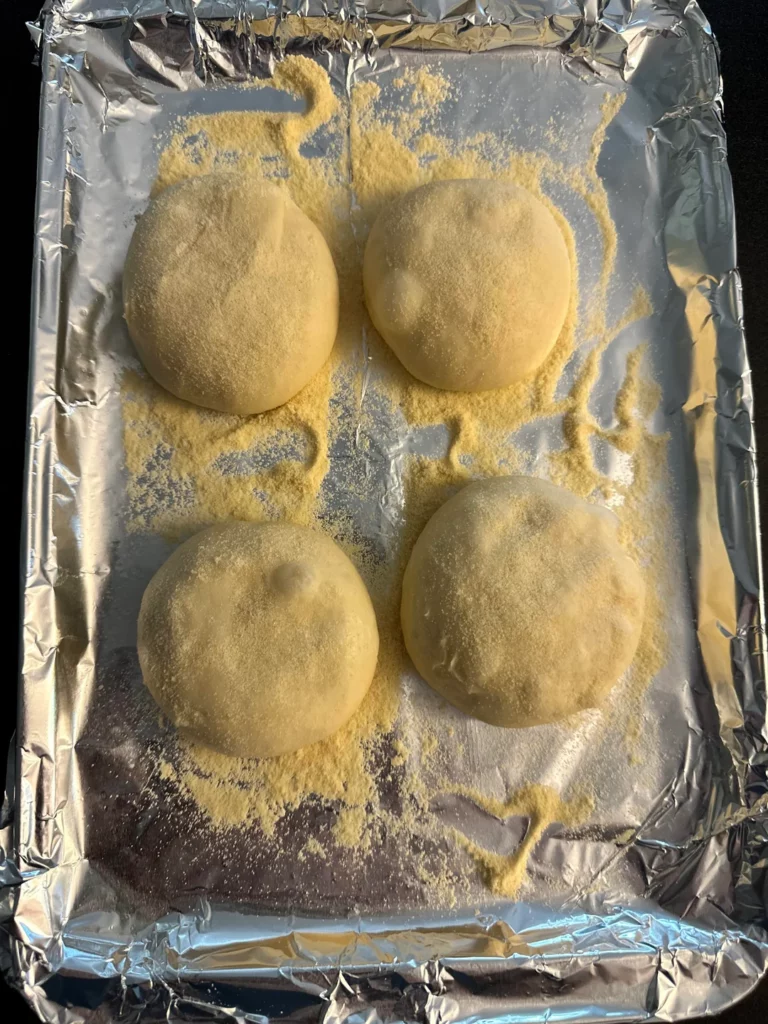
Gently ease the dough onto a work surface generously dusted with cornmeal or semolina flour.
Sprinkle the top as well; this keeps the dough from sticking and gives muffins their traditional sandy crust.
Lightly pat the dough into a ½-inch-thick round.
Using a 3 ½” round cutter, cut out 16 muffins, keeping the cuts close together to minimize scraps.
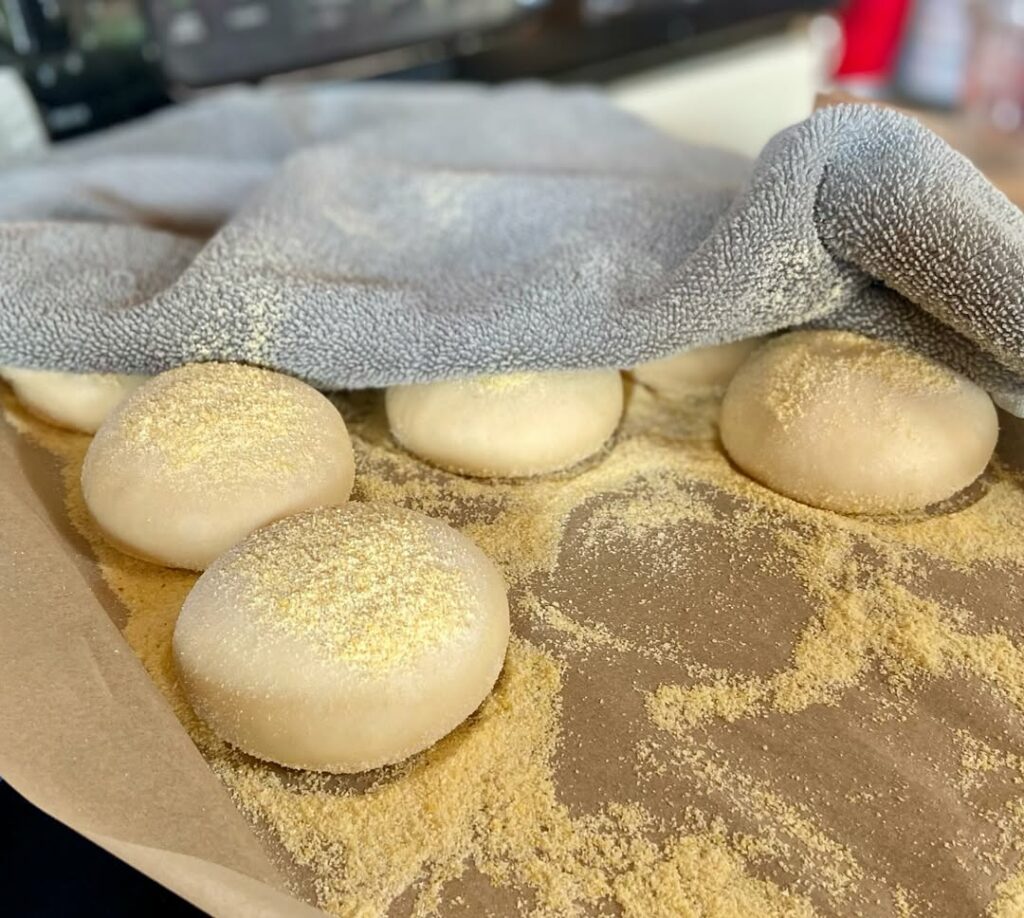
Transfer the rounds to a piece of parchment dusted with cornmeal. Cover loosely and let rise until noticeably puffy, 20 to 30 minutes.
Cooking in a Skillet
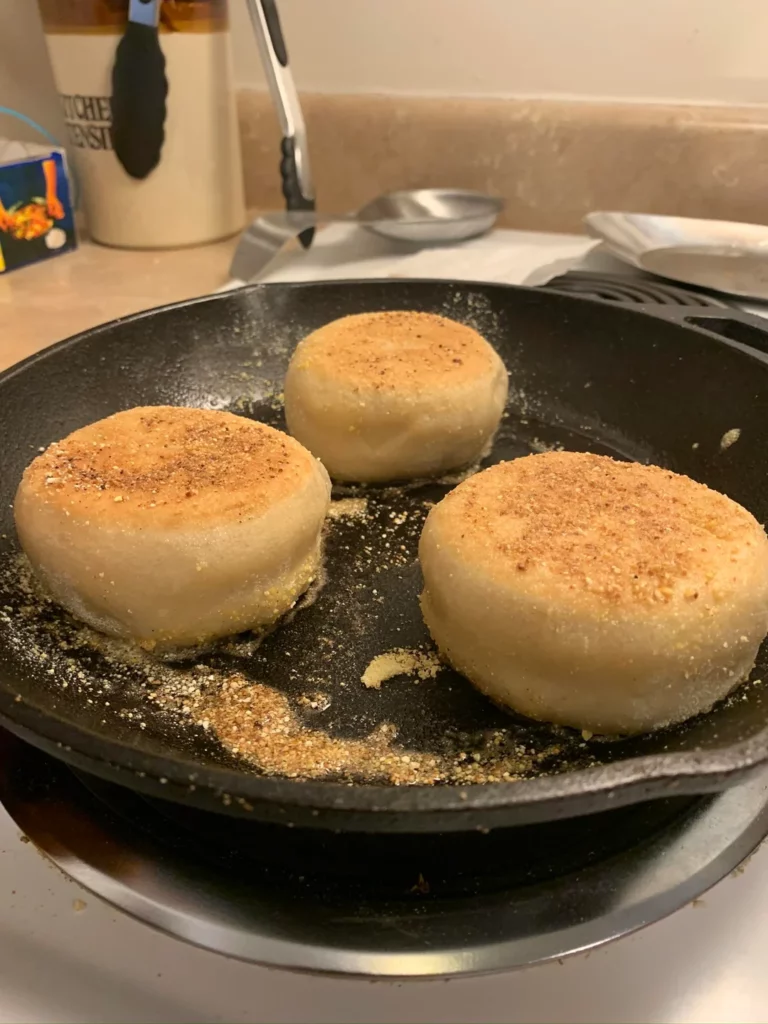
Preheat a 10″ to 12″ cast-iron or nonstick skillet over medium-low heat until a few drops of water sizzle and dance across the surface before evaporating. (If using an electric griddle, preheat to 350°F.)
Carefully transfer the muffins to the skillet. Cook until the bottoms are golden and the sides look dry and matte, 10 to 15 minutes.
Flip and cook the second side until browned, another 10 to 15 minutes.
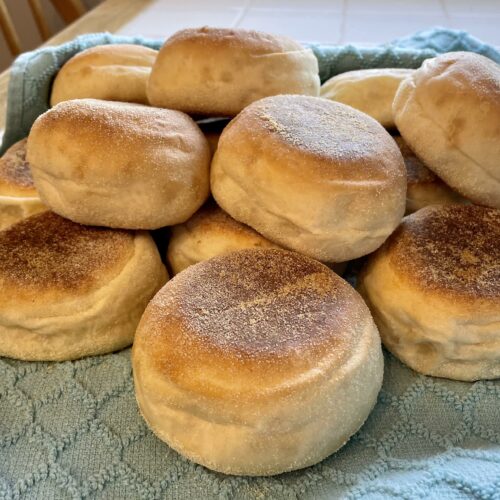
At this point, the muffins should be about 1″ thick and sound hollow when tapped.
Baker’s note: If they brown before the insides are cooked through, lower the heat and extend the cooking time. English muffins are essentially griddled bread, so patience pays off.
Cooling and Cutting
Cooling time: about 10 minutes. This lets steam escape so the insides finish setting. If you cut them open right away, they’ll be gummy.
Proceed to toast and serve however you enjoy from as simple as a butter or jam spread
English Muffins King Arthur
Ingredients
- 1 ³/₄ cups 397g milk, lukewarm
- 3 tablespoons 43g butter, softened
- 1 ¹/₄ to 1 ¹/₂ teaspoons table salt to taste
- 2 tablespoons 25g granulated sugar
- 1 large egg lightly beaten
- 4 ¹/₂ cups 540g flour
- 2 teaspoons instant yeast
- Semolina flour or farina for sprinkling
Instructions
- Measure flour and mix with all ingredients except semolina/farina.
- Beat dough with mixer until smooth and stretchy, or use bread machine dough cycle.
- Shape dough into a ball, cover, and let rise until puffy, 1–2 hours.
- Sprinkle griddle or pan with semolina/farina, oil first if not non-stick.
- Deflate dough, divide into 16 pieces, roll into balls, flatten to 3–3½ inches.
- Place on cold griddle or semolina-sprinkled baking sheet, sprinkle tops with more semolina/farina.
- Cover and rest 20 minutes.
- Cook muffins on low heat 7–15 minutes per side until golden and cooked through, or finish in oven at 350°F for 10 minutes if needed.
- Cool completely, then split with a fork and serve.
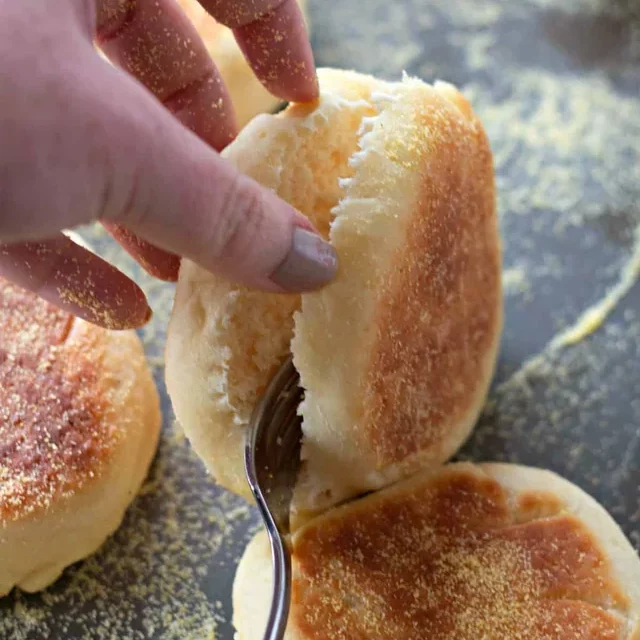
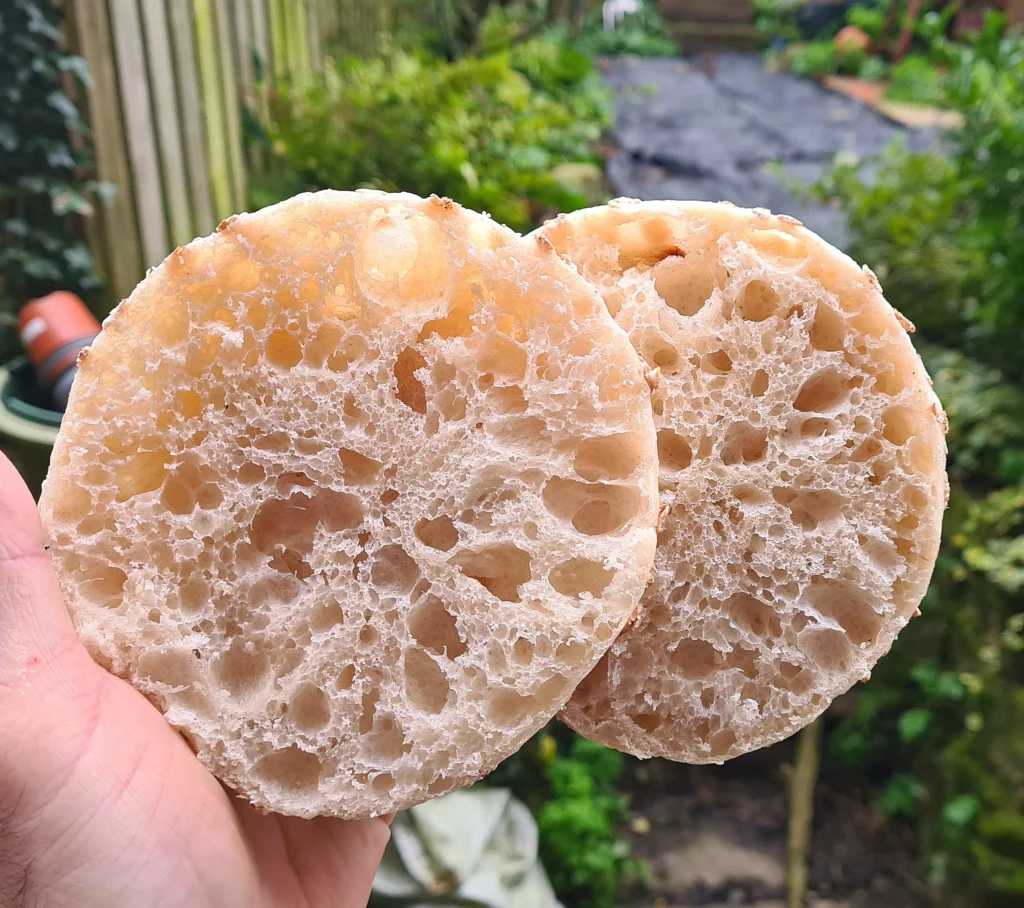
Best practice: fork-split them (never slice with a knife) after that cooling period — the ragged interior is what gives you those famous nooks and crannies.
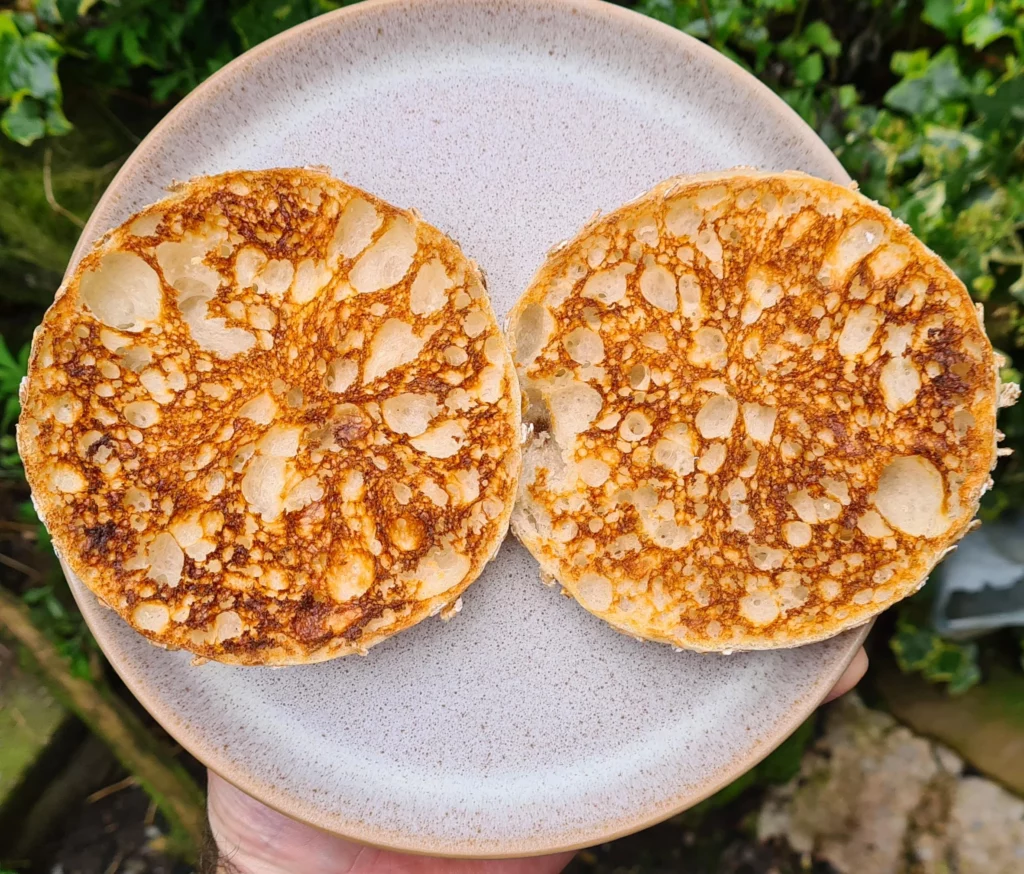
Serving: toast them lightly before adding butter, jam, or toppings.
Toast and serve with butter, jam, or make breakfast sandwiches, or use as the base for eggs Benedict.
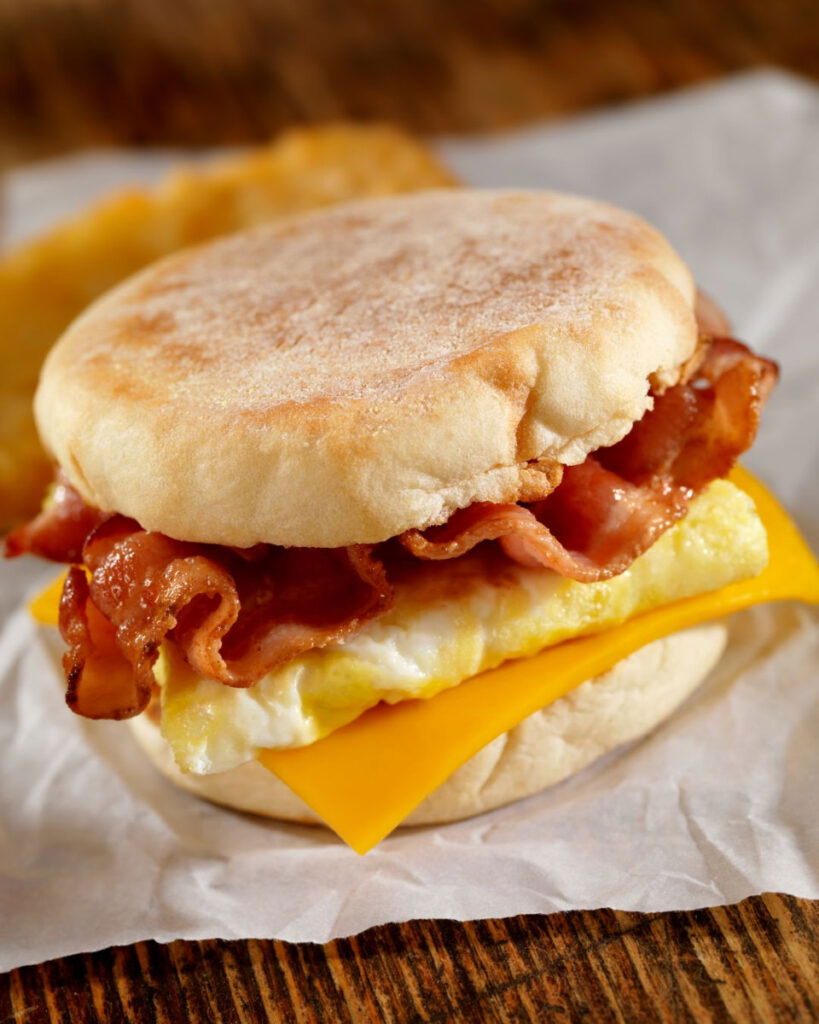
Bacon McMuffins
Ingredients
- English Muffin (From above recipe)
- 1 Egg
- A splash of milk
- 1 Slice American Cheese (melts the best)
- 1 Slice Bacon
- 1 Pinch each Salt and Pepper
- A little butter
Procedure
- Heat your skillet on medium heat, melt butter, and toast your cut English muffins on the insides till toasty
- Render bacon, or add butter if using Canadian bacon sizzle till crisp the way you like it
- Crack and egg add milk, whisk, salt and pepper. Whisk till combined..Microwave this mixture in 30-second intervals until done to your liking
- Assemble the muffin sandwich with cheese, egg, and Canadian bacon. Add the whole thing back to the still-warm pan, cover, and let steam for about 30 seconds. Enjoy!
Storage information: Store muffins at room temperature in an airtight container for up to 3 days.
For longer storage, freeze (well-wrapped) for up to 2 months; thaw at room temperature before toasting.
Also Read
How to Make Southern Buttermilk Biscuits
Leave a Reply