
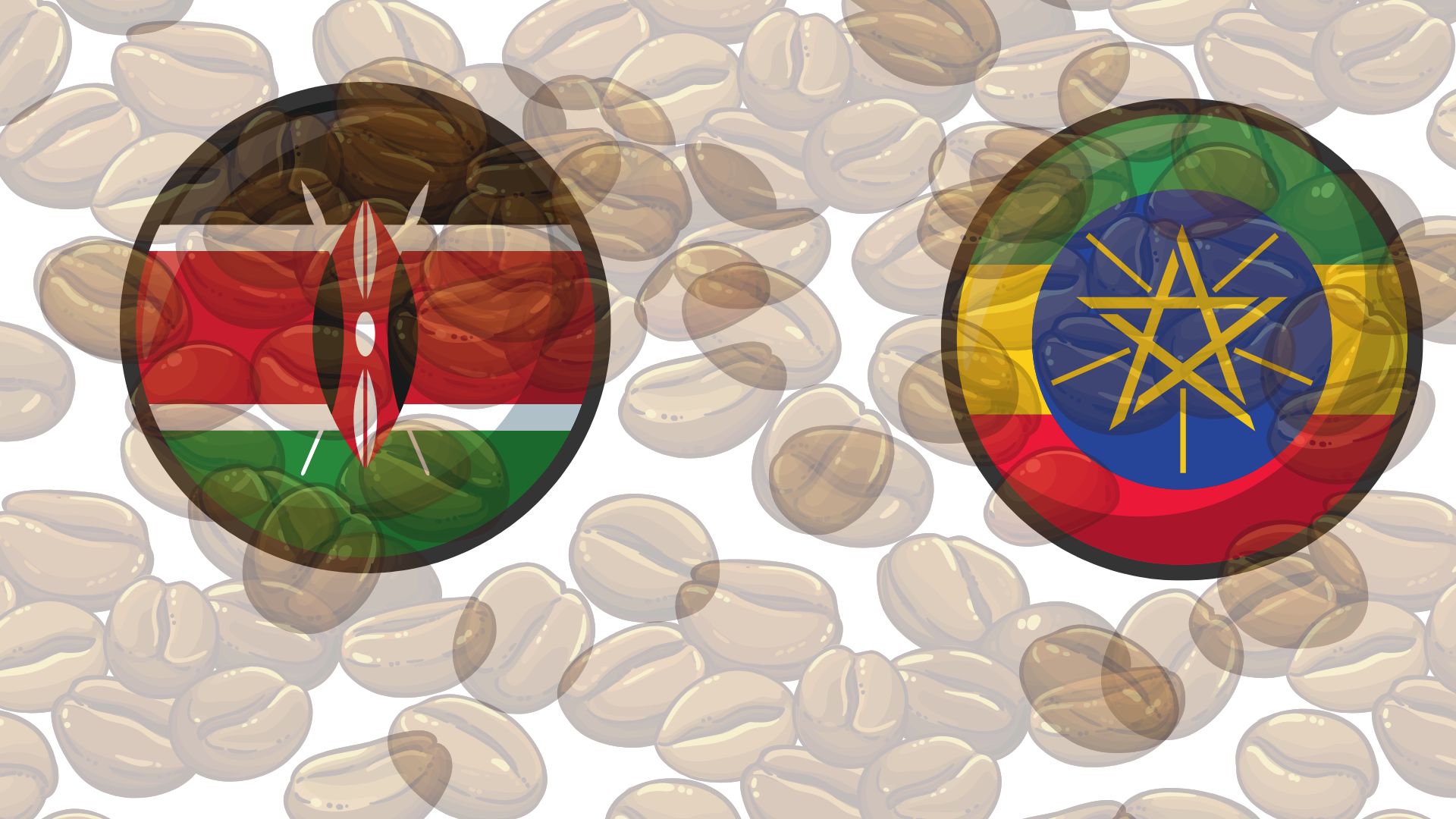
When it comes to African coffee, two giants stand out without question: Kenya and Ethiopia. These countries aren’t just coffee producers — they’re legends in the coffee world.
Where It All Begins…
Ethiopia is widely considered the birthplace of coffee. Legend has it that a goat herder named Kaldi discovered the energizing effects of coffee beans centuries ago.
Today, Ethiopia remains the only country where coffee still grows wild in the forest, which adds a whole level of genetic diversity and uniqueness to its beans.
Its climate is savannah tropical, and the coffee is typically grown between 1,500 to 2,200 meters above sea level.
Kenya, on the other hand, entered the coffee game much later, but with laser precision.
Introduced during British colonial times, Kenya built a highly structured system. Most coffee is grown on the fertile slopes of Mount Kenya and the Aberdare range, in a cool highland climate.
The altitude here ranges from 1,400 to 2,000 meters, allowing for slow bean development and complex flavors.
Grading & Processing Systems
One of the first major differences between the two countries is in how they grade their coffee.
- Kenya uses a size-based grading system: AA, AB, PB, etc. AA is the highest grade and often the most prized, based on bean size and density, which can indicate quality.
- Ethiopia typically grades beans based on quality (Grades 1–5), with Grade 1 being the highest. But what makes Ethiopian coffee unique is the sheer variety of heirloom cultivars—many of which have never been catalogued.
When it comes to processing:
- Kenyan coffee is almost exclusively washed (wet-processed). It doesn’t vary much in method, but the results are consistently outstanding.
- Ethiopia offers both washed and natural (dry-processed) coffees, each with very different flavor outcomes.
Flavor Profiles
Let’s get to the fun part: how they actually taste.
🇪🇹 Ethiopian Coffee
Washed Ethiopian coffee is:
- Light-bodied and tea-like
- Bright and citrusy (think Meyer lemon)
- Full of floral aromatics like jasmine and bergamot
- Sometimes even herbal or spicy, with notes like honey, hops, or even black tea (Earl Grey fans, this one’s for you)
Natural Ethiopian coffees are:
- Rich in berry and chocolate notes, especially blueberry
- Juicier and mouth-filling
- But often inconsistent, with some tasting muddy, overly sweet, or “dirty” if poorly processed
Example: Ethiopian Harrar is famous for its strong blueberry sundae vibe — when done well, it’s unforgettable.
But roasting can be tricky. Beans don’t always roast evenly, so home-roasters may need to pick through them before or after.
📝 My take: Washed Ethiopians are often cleaner and more elegant. Naturals can be hit-or-miss. If you’re new to Ethiopian coffee, start with a washed one.
🇰🇪 Kenyan Coffee
Kenyan coffee is all about:
- High acidity, often described as wine-like or juicy
- Citrus notes, from lemon to pink grapefruit
- Thick berry sweetness, like blackcurrants, red currants, and blackberry jam
- Sometimes, savory notes sneak in — tomato, basil, or even something “brothy” (especially if under-roasted)
Kenya AA coffees tend to have that sharp brightness and zesty citrus that wakes up your senses.
But the best Kenyans balance it with a full body, making the cup feel substantial and layered.
📝 Personal note: If you’re sensitive to tomato flavors, some Kenyans might find it too savory.
But a good Kenya AA is one of the best coffee experiences possible—bright, clean, and deeply sweet.
Quick Comparison
| Feature | Ethiopian Coffee | Kenyan Coffee |
|---|---|---|
| Climate | Savannah tropical | Cool highlands |
| Altitude | 1,500–2,200m | 1,400–2,000m |
| Processing | Washed & Natural | Almost always washed |
| Body | Medium to light | Full-bodied |
| Acidity | Bright, citric, floral | Bright, winey, sometimes tomato-like |
| Flavor Notes | Earl Grey, lemon, herbs, berries, honey | Berries, citrus, currants, savory spices |
| Consistency | Wide variety, some naturals inconsistent | More uniform across grades |
So… Which One’s Better?
This is like asking whether jazz is better than classical. It depends on what you’re in the mood for.
- Want something floral, complex, and refined? Go for a washed Ethiopian.
- Craving jammy, juicy fruit bombs with zingy acidity? A Kenya AA will thrill you.
- Feeling adventurous? Try a natural Ethiopian—but know it’s either going to blow your mind or confuse your palate.
Personally, I love both. There’s a time and place for each. Some mornings call for a delicate washed Ethiopian with citrus and florals.
Other times, I want to punch my taste buds awake with a bold, grapefruity Kenyan that practically sparkles.
Leave a Reply