
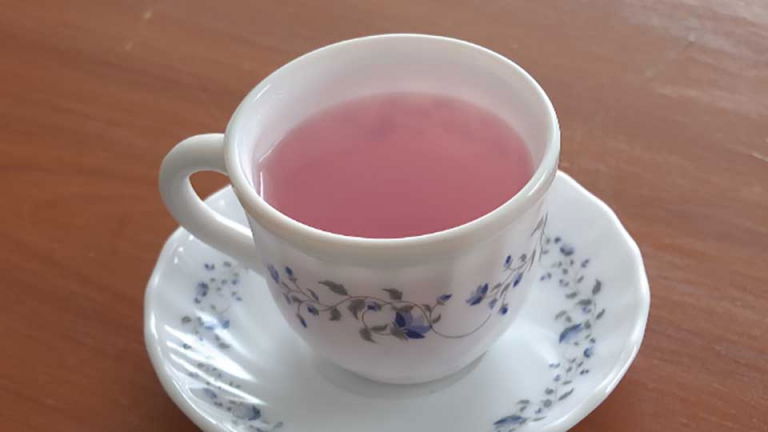
Despite the name, purple tea doesn’t actually brew into a purple drink — it usually looks light brown in your cup.
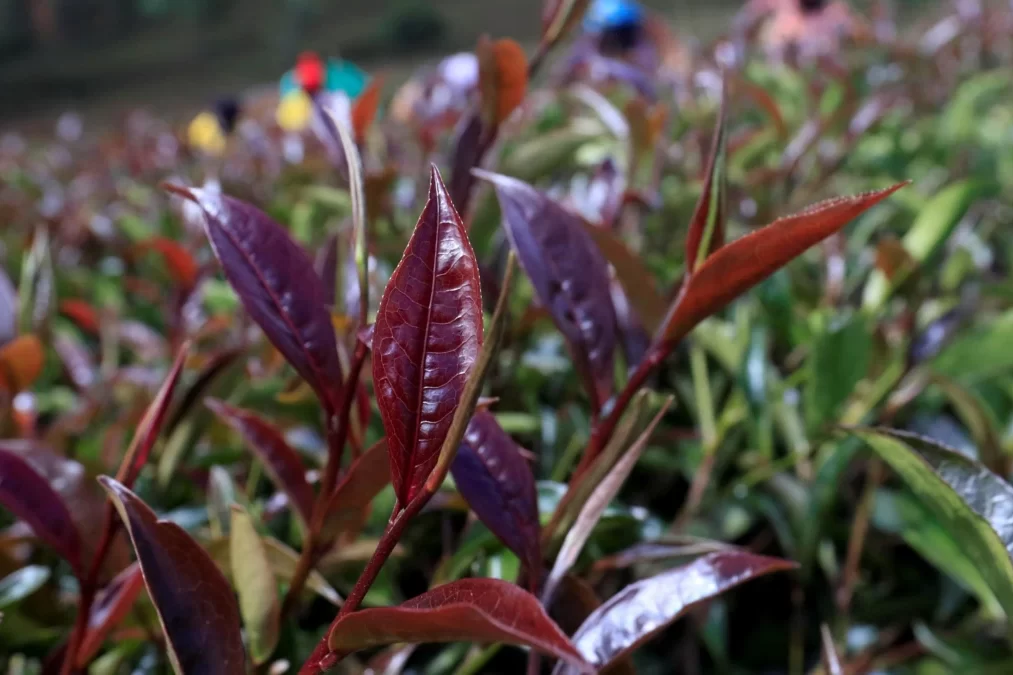
The name “purple tea” comes from the color of the leaves on the plant, not the color of the brewed tea.
But here’s the cool part: if you add a squeeze of lemon, the acidity causes the natural compounds (anthocyanins) to change.
This reaction can turn the tea a purplish or pinkish color, showing off its hidden purple side.
Kenyan vs Chinese Purple Teas
Even though both are called purple tea, Kenyan and Chinese purple teas are very different.
They may come from similar tea plants, but the flavor and color change a lot depending on where and how they’re grown.
This is called terroir — things like soil, weather, and altitude affect the taste.
Kenyan purple tea is usually sweet and smooth, with a light, fruity flavor. It’s also processed more like black tea, meaning it’s fully oxidized.
Chinese purple tea, especially from Yunnan, is often more complex — it can taste earthy, floral, or even a bit smoky.
Chinese purple tea also comes in many styles. Some are sun-dried like white tea, some are made like black tea, and others are fermented like pu’er.
When brewed, Kenyan tea is light brown, unless you add lemon, which can turn it purple.
Chinese purple teas can brew into golden, red, or dark colors, depending on how they’re made.
Why is it Purple?
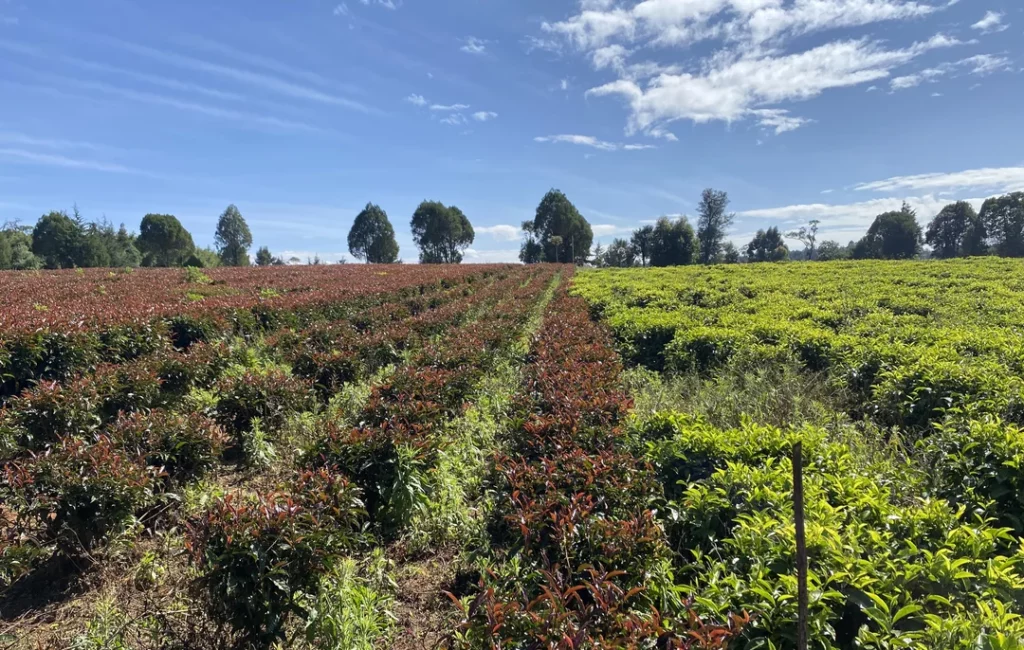
Purple tea is made from tea leaves that have more anthocyanin (a purple pigment) than chlorophyll (the green pigment in most plants).
It’s believed that plants with anthocyanins evolved this way as a way to protect themselves from strong sunlight, almost like a natural sunscreen for leaves.
Kenyan purple tea comes from a special variety of the Camellia sinensis plant — the same plant used for green, black, and oolong tea.
Through natural breeding, scientists developed a version of the tea plant that produces purple-colored leaves, especially when grown in Kenya’s cool, high-altitude regions.
This unique purple color comes from the high levels of anthocyanins in the leaves. Regular tea plants don’t produce this much of the pigment.
The Tea Research Foundation of Kenya (TRFK) created this purple variety over 30 years ago, and by 2011, small farmers in Kenya began planting it in small scale.
Purple tea is a type of Camellia sinensis var. assamica, but with its own twist — it’s a new category of tea with its own look and health benefits.
And no, it’s not genetically modified. It’s 100% natural and still part of the traditional tea family — just with a colorful upgrade.
Flavor Profile
Kenyan purple tea has a flavor that’s somewhat like green tea, but lighter and smoother.
It’s also a bit like white tea in how delicate it tastes, though not quite as subtle.
The tea is mild and smooth, with no bitterness — a big plus compared to green or black tea.
You’ll notice a woodsy base, with faint herbal notes in the background.
There’s also a natural berry or grape aroma, thanks to the anthocyanins, along with a gentle floral scent.
Nothing about it is bold — the flavors are soft and refined, leaning toward elegance rather than intensity.
The aftertaste is clean and crisp, making it a very easy tea to sip.
It’s best enjoyed plain, but it’s recommended to add a squeeze of lemon, which helps bring out the fruity and floral notes even more.
It has much less caffeine — about half the amount found in green tea, so it’s great if you want something calming.
Health Benefits
Purple tea is full of health benefits, but it’s not a miracle drink to cure all your ailments
It’s rich in antioxidants, especially anthocyanins — the same ones found in blueberries and red cabbage. These antioxidants are rare in teas, which makes purple tea stand out.
They help protect your cells from damage, reducing the risk of problems like heart disease and some cancers.
Purple tea also has strong anti-inflammatory properties.
The mix of anthocyanins and polyphenols helps calm inflammation in the body, which is linked to issues like arthritis, obesity, and diabetes.
It’s also good for your skin and aging.
The antioxidants fight off free radicals that speed up aging. Over time, purple tea may help improve skin elasticity and reduce wrinkles.
Purple Tea vs Green Tea

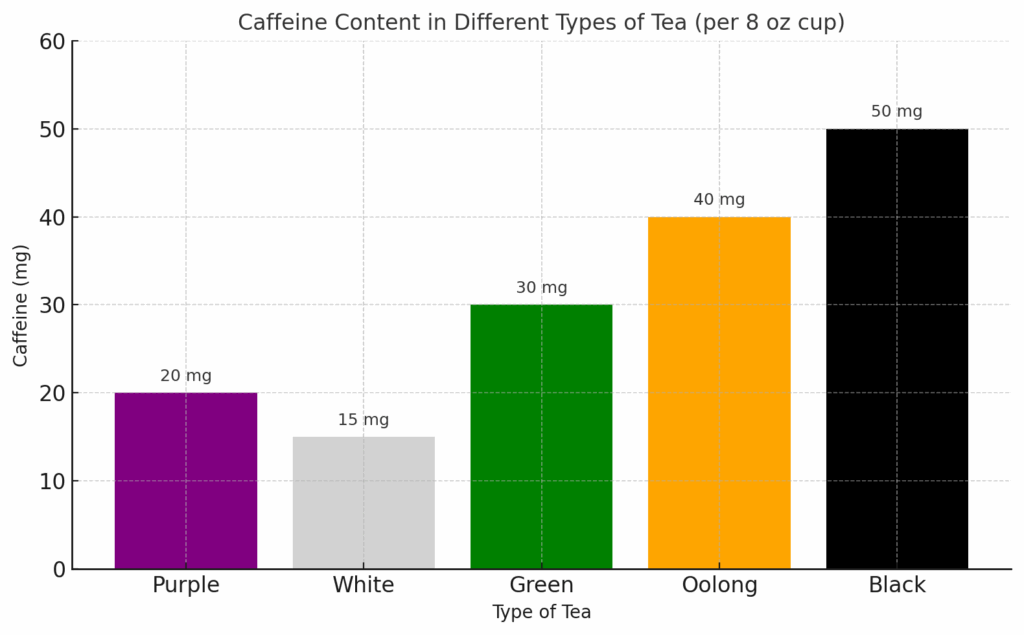
Purple tea has less caffeine — about 20 mg per cup, compared to 40 mg in green tea. It’s a great option if you want something gentler.
In terms of flavor, purple tea is smooth, mild, and slightly fruity, while green tea has a grassy, herby taste and can be a bit bitter.
When it comes to anti-inflammatory benefits, Kenyan purple tea may have the upper hand. It contains anthocyanins, which green tea doesn’t have.
For antioxidants, both teas are powerful, but in different ways.
Purple tea offers a broader range, with anthocyanins plus polyphenols. Green tea is packed with catechins, especially EGCG, one of the most studied antioxidants in the world.
So really, both teas are valuable. Purple tea gives you rare antioxidants not found in other teas, while green tea gives you well-researched, proven ones. They complement each other perfectly.
Who is Purple Tea For?
Tea enthusiasts: This is a niche product, so if you love exploring unique teas, purple tea is a niche gem worth adding to your collection.
It’s rare, elegant, and totally different from your usual greens and blacks.
It has about half the caffeine of green tea, so it’s ideal for anyone who wants a mild energy boost without the jitters.
Hate bitter tea? Purple tea is smooth, mild, slightly fruity, and has a clean finish. Great for easy sipping all day.
Where is Purple Tea Grown in Kenya?
Purple tea is grown in highland areas of Kenya, where the air is cool and the land is perfect for growing tea.
These places are found in the central and western parts of the country.
1. Mt Kenya Region
This area is in the central part of the country near Kenya’s tallest mountain, Mount Kenya.
Towns like Kirinyaga, Embu, and Meru are found here.
The high altitude and rich soil help the tea plants grow strong and colorful.
2. Nandi Hills
This is a hilly area in western Kenya, known for tea farms.
The cool weather and fresh air are great for growing purple tea.
Many small farmers here grow tea on family land.
3. Kangaita and TRFK Research Stations
The Tea Research Foundation of Kenya (TRFK), now part of the Kenya Agricultural and Livestock Research Organization (KALRO), developed the purple tea cultivar here
Kangaita Tea Research Station (in Kirinyaga) is where the first experimental plantings happened
Kenyan Purple Tea Growing, Harvesting & Processing: Farm Tour
Nescafe vs Jacobs: Which is the Better Coffee?
Nescafe Classic vs Nescafe Gold, What is Different?
Leave a Reply