
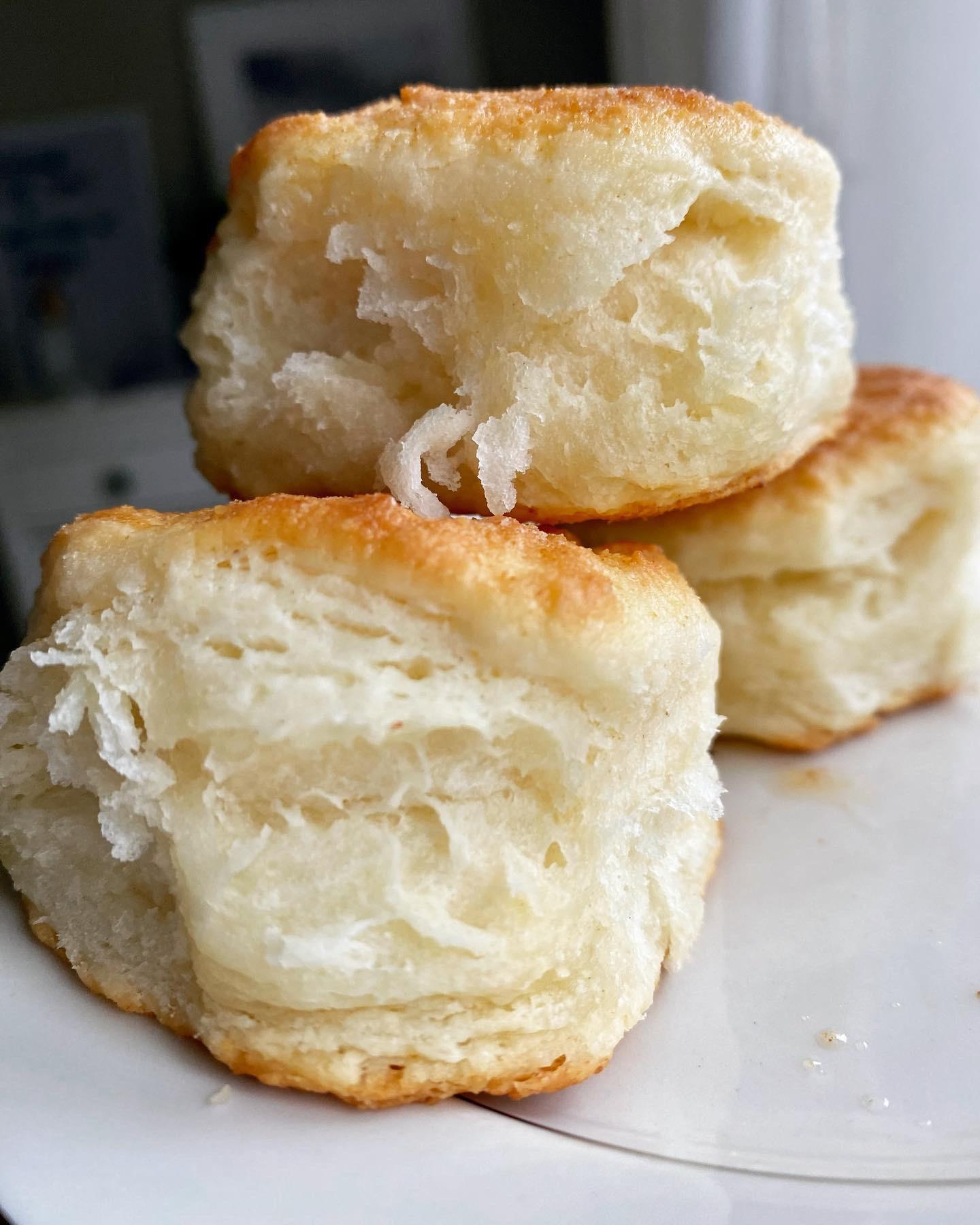
Good biscuits are just as simple as cold ingredients (butter and buttermilk), gentle folding (it’s easy to overmix), and a hot oven.
That is it.
The result is tall golden biscuits with flaky insides
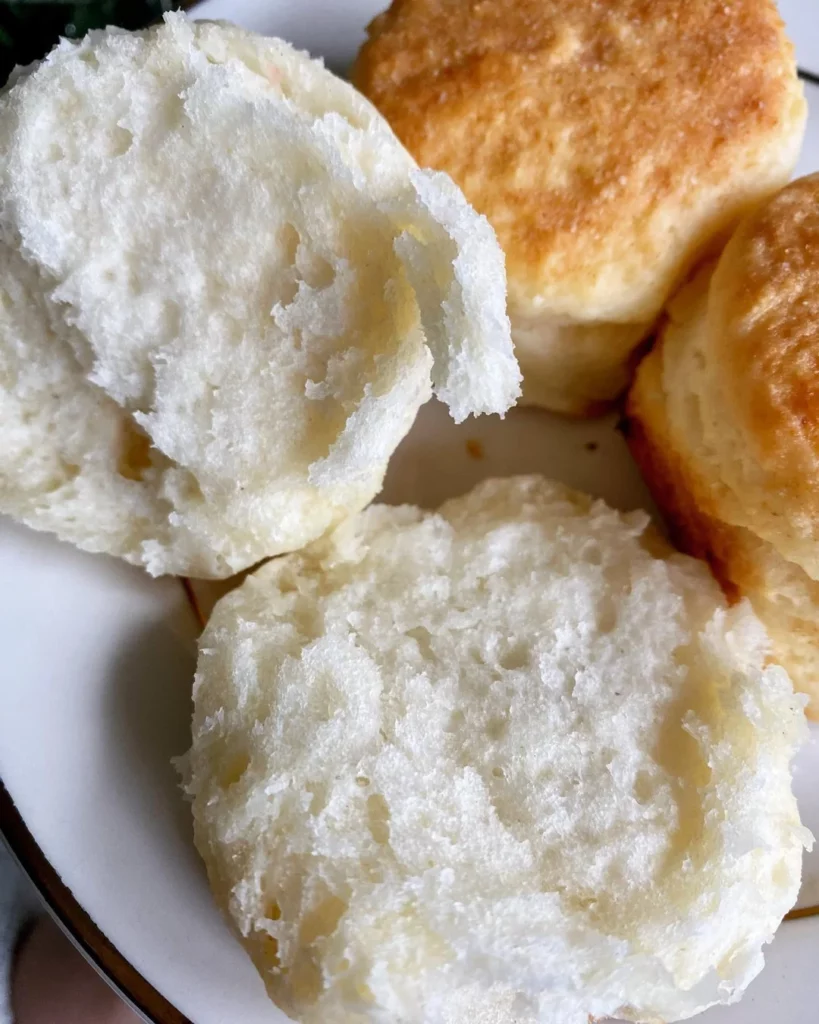
Base Dry Ingredients
These biscuits start with a simple pantry staple, dry ingredients such as flour, salt, and baking powder.
Sugar is optional; you can add it to balance out everything
It’s good practice to start by sifting your flour to get rid of any lumps, but that is optional, and you can skip
Salt sharpens the flavor while baking powder gives the rise. You can optionally use baking soda as your rising agent.
When these are whisked together first, it guarantees every biscuit rises evenly and tastes balanced instead of having random salty pockets, as opposed to when mixed with wet ingredients
Mix well, make sure you really get everything combined evenly! We don’t want those nasty patches of baking soda and salt.
Adding Fat
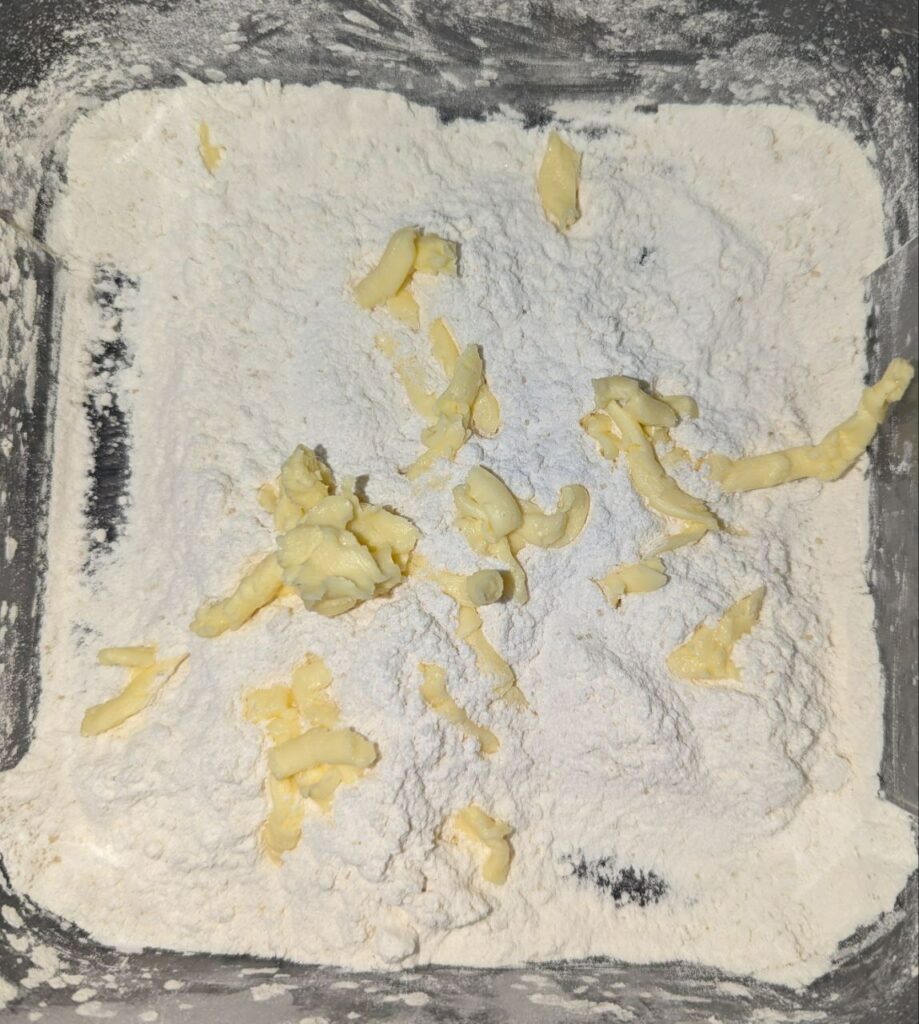
The best choice of fat is obviously butter. You can use margarine or shortening, but butter is the recommended choice.
And the colder your butter, the better the recipe turns out!
Make sure it’s almost frozen and cut into small cubes, then mix them in the flour, which gives a really good resulting texture for the biscuits.
Since butter is rock solid anyway, instead of cutting it…. You can grate it into the flour mixture.
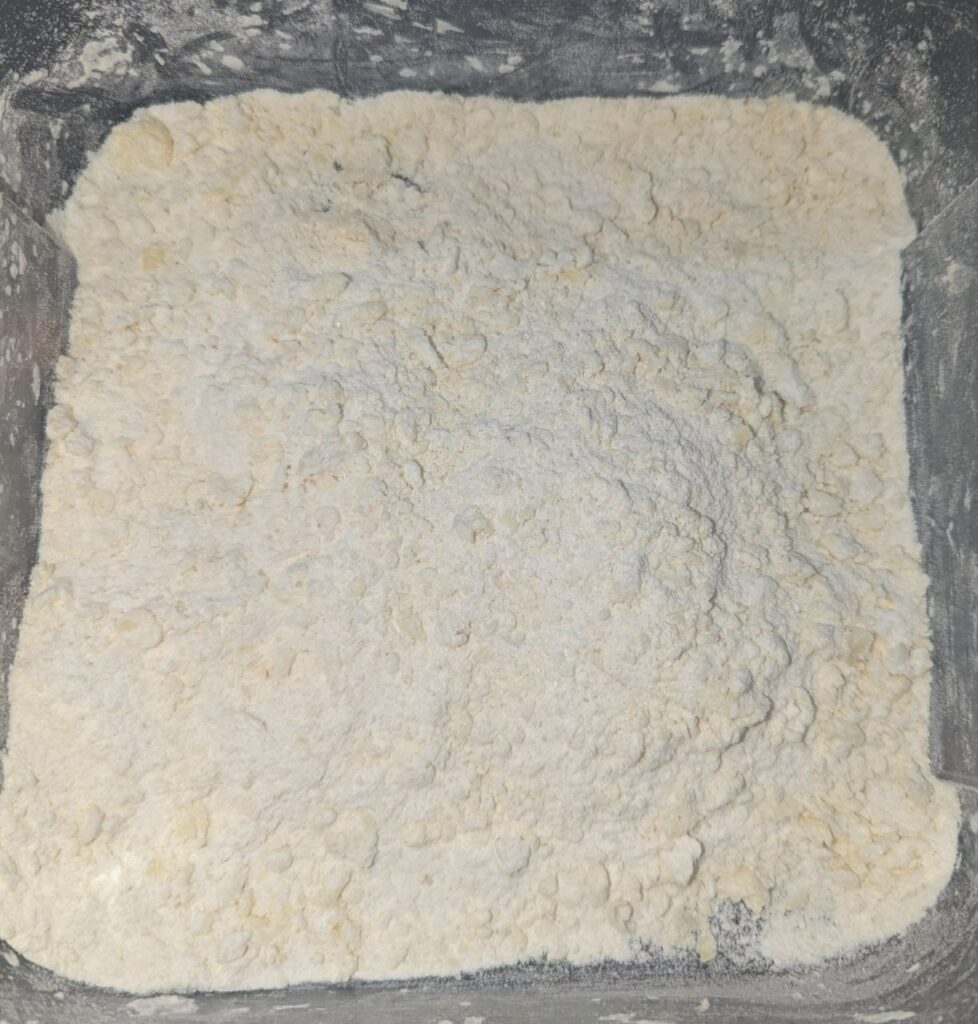
Using all cold ingredients, especially the fat, so that in the oven as everything heats up, the water in the butter is steamed up; and the build in the dough helps our biscuits rise even more.
It’s this process that gives biscuits their flakiness. Using soft butter, and all you’ll get is just a dense bread.
Adding Buttermilk
Buttermilk is the liquid of choice because it doesn’t just moisten the flour; its acidity reacts with the baking powder and baking soda (if using) in a neutralization reaction that releases gas that helps biscuits rise even higher.
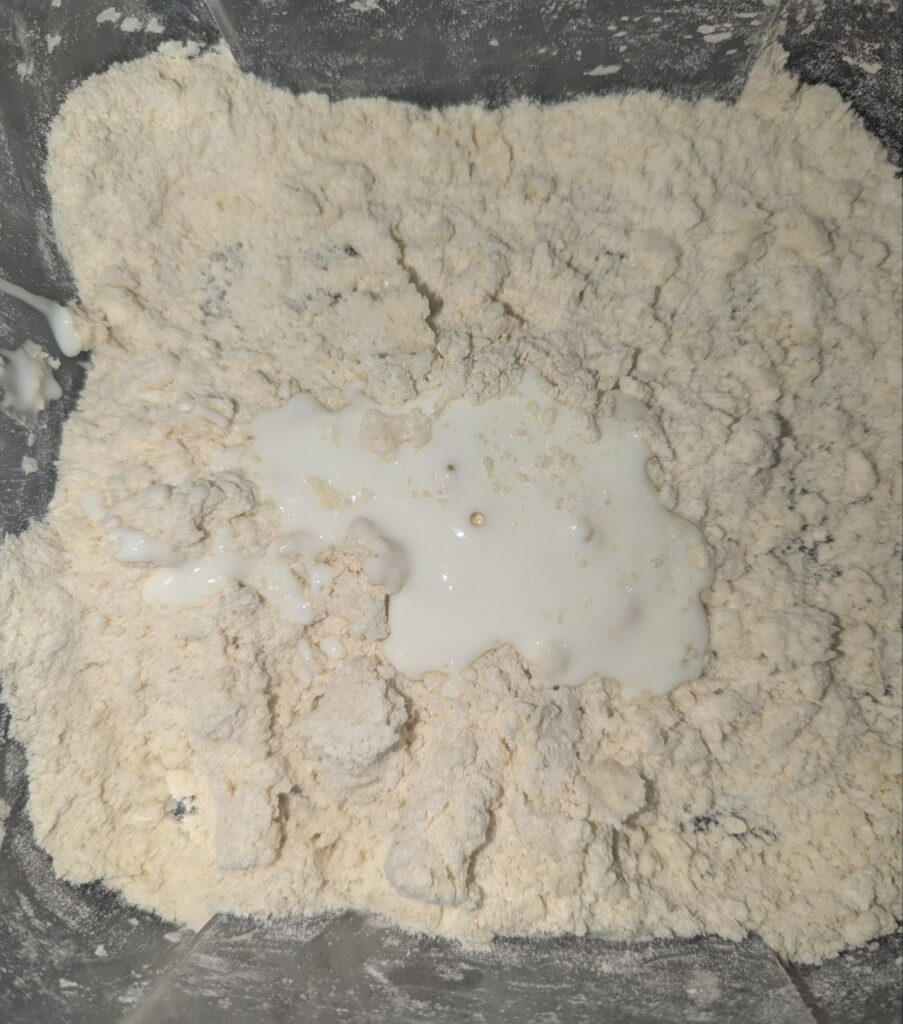
It also brings a tang that balances the richness of butter.
Stirring in honey adds a touch of sweetness and helps with the browning, but it’s all optional
Keeping both the buttermilk and honey cold is essential; if the butter softens too soon, the flakiness disappears.
When mixing in buttermilk, we add a little at a time while combining; don’t just dump everything in one go!
Also, we don’t wanna overwork the dough. Just the same as when making fluffy pancakes.
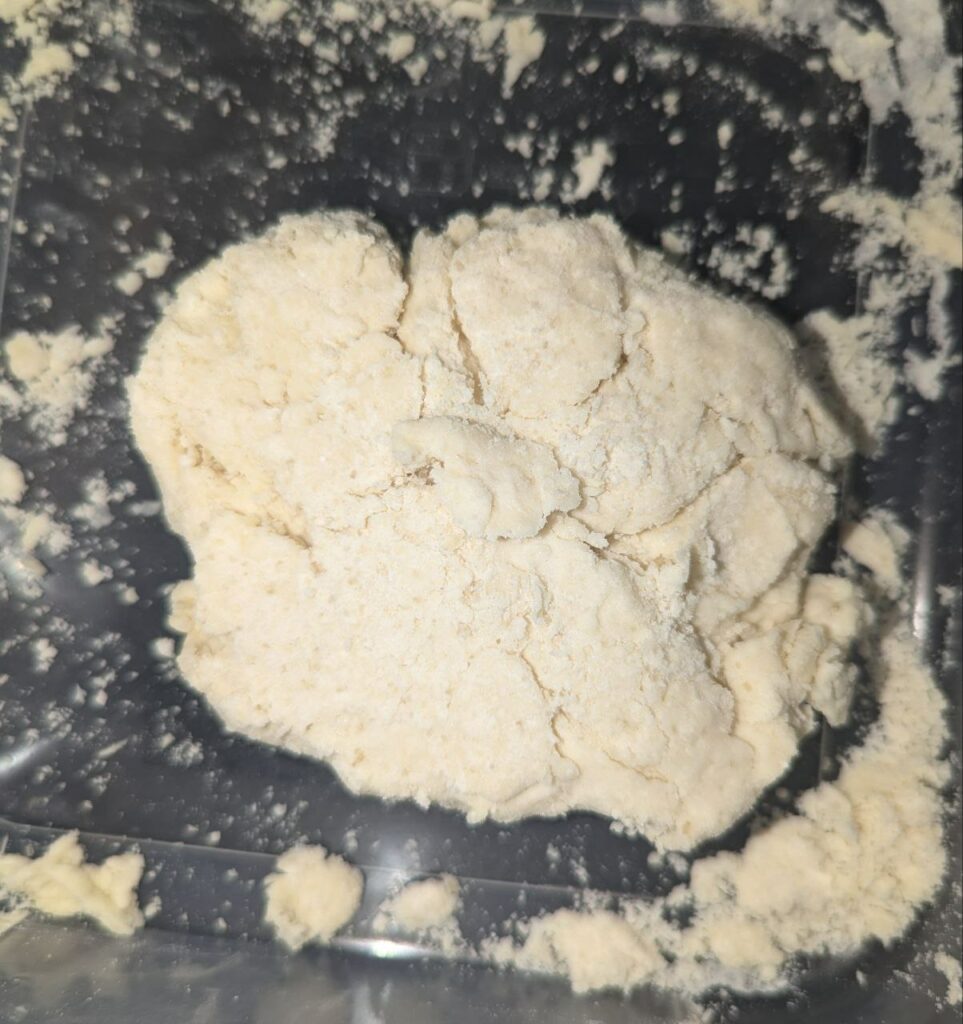
The less you mix, the fluffier they turn out.
Too much stirring or kneading develops the gluten, and that results in chewy biscuits.
Folding the Dough
Floor your working surface, and the dough goes on it. Everything is wet and sticky at this point.
We wanna form a dough by folding it gently over itself. Your dough will smooth as you keep going.
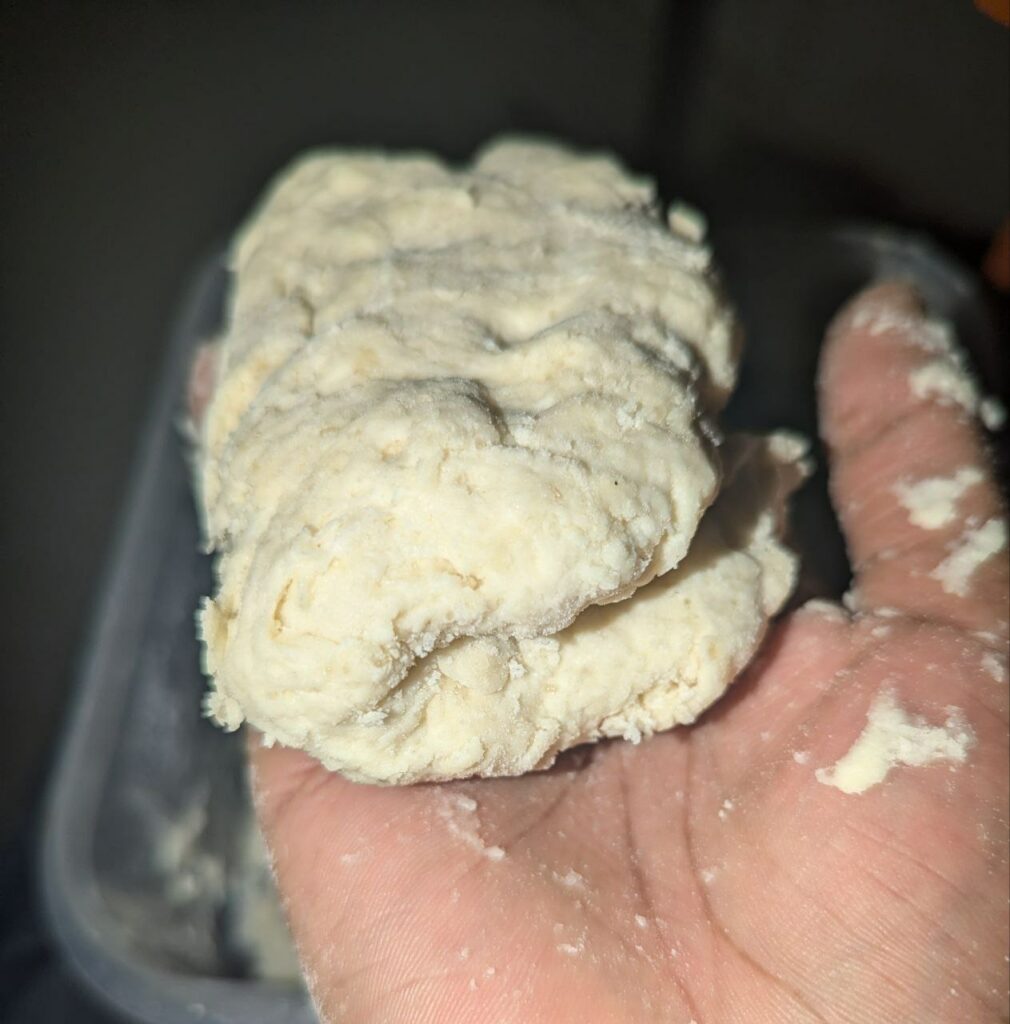
Your dough is ready when it is no longer sticky, just manageable.
Also, remember to dust your hands constantly
The folds mimic the layering process of puff pastry, just on a simpler scale.
Do a maximum of 4 folds, nothing more
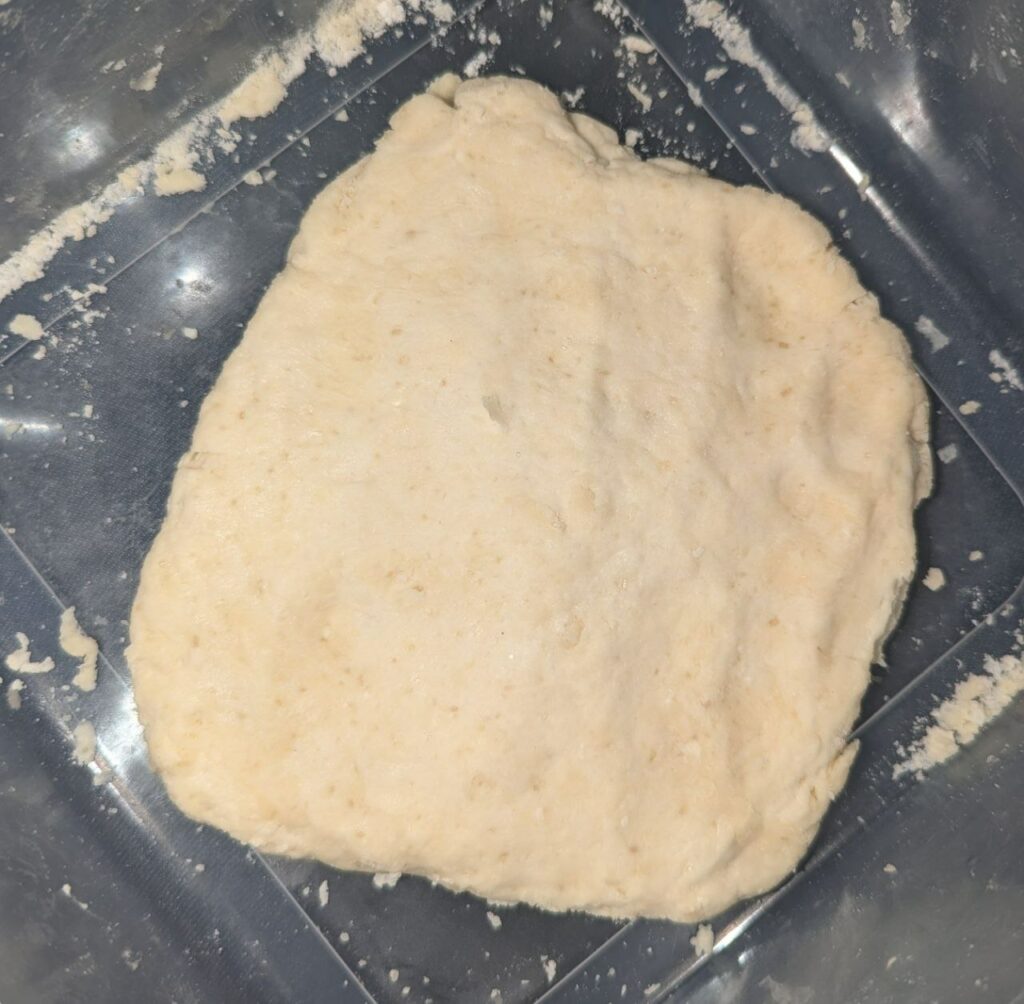
Each fold builds more separation, and each separation becomes a layer once baked.
Be gentle overall with the kneading to maintain a light texture.
Preparing for the Oven
Start by pre-heating your oven (420 °F)
Rolling the dough to an even thickness means the biscuits bake at the same pace.
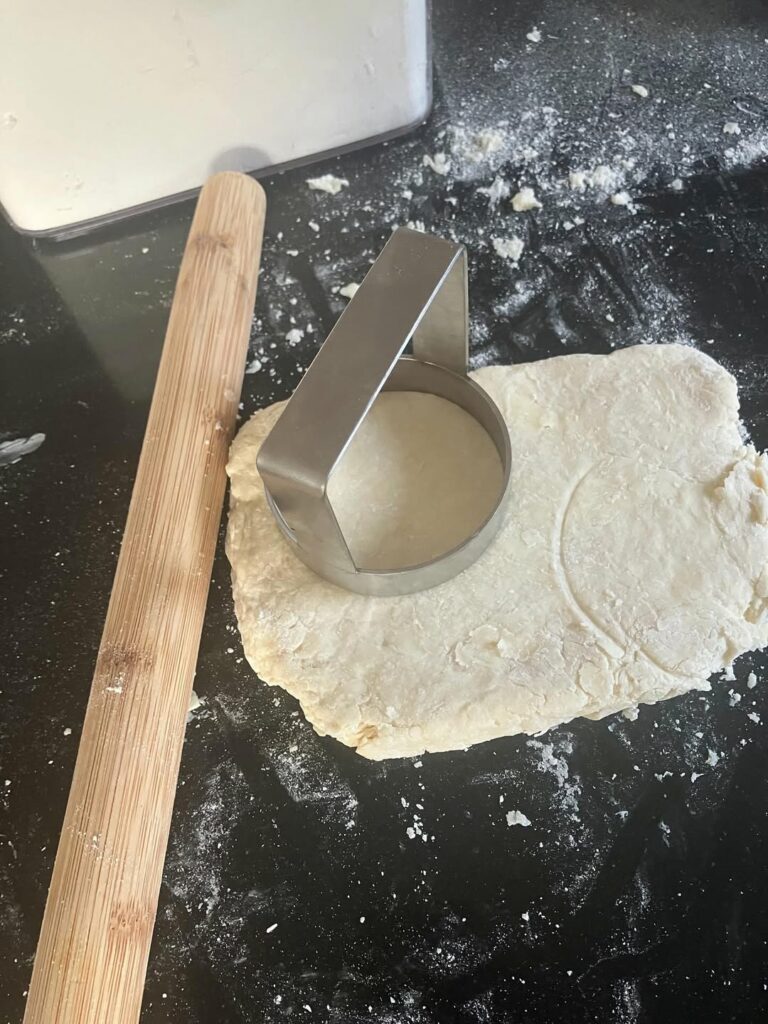
We want an extra-thick dough, like 1 inch or 3/4 inch on the low end.
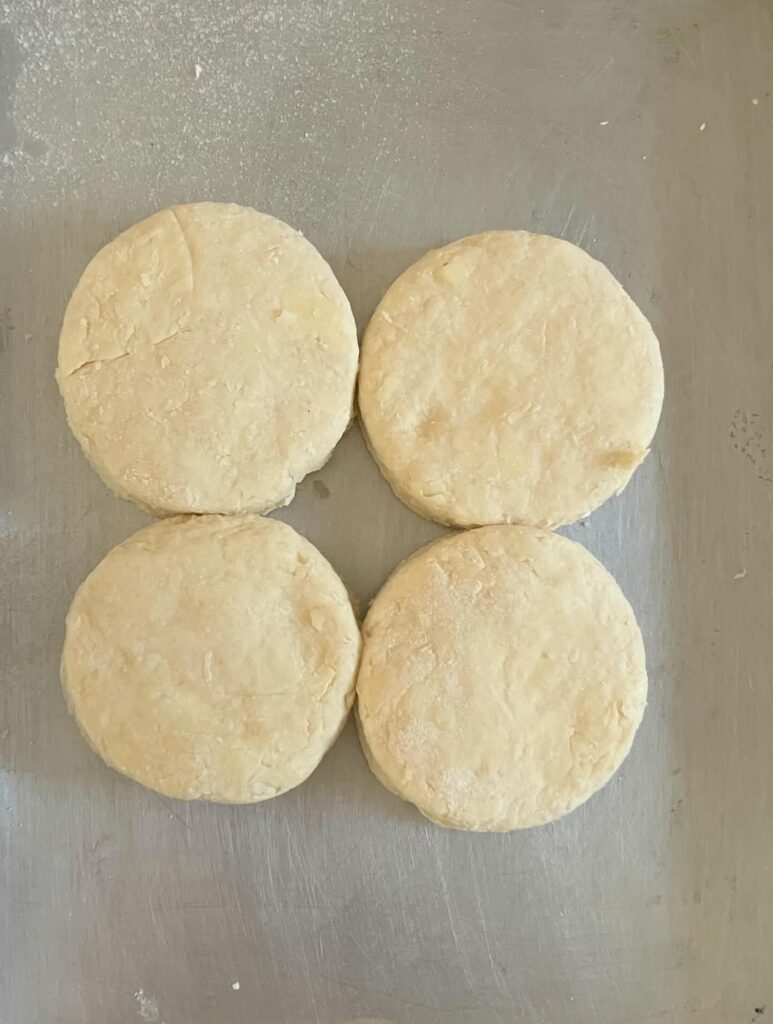
Then you may need a cookie cutter to cut the dough, but if you don’t have one, the rim of a glass or cup should do just fine.
Just don’t twist while cutting, it ruins the fluffy. Cut top-down as gently as possible.
If deformed, then shape it up gently, placing it into your skillet. Make sure they are touching or snuggling each other.
This ensures they grow taller instead of sideways while raising
Before they go in the oven, brushing the tops with buttermilk sets them up for a rich golden color.
You can optionally use butter or mayonnaise to get that golden top
The oven should already be blazing hot (420 °F) for 15 minutes, so the biscuits rise quickly while the butter is still intact.
That sudden burst of steam is what creates the lift.
Finishing Touch
Fresh from the oven, the biscuits should be drenched with melted butter brushing.
Once it dries out, brush more butter!
The heat draws butter into the crust, making the tops glossy
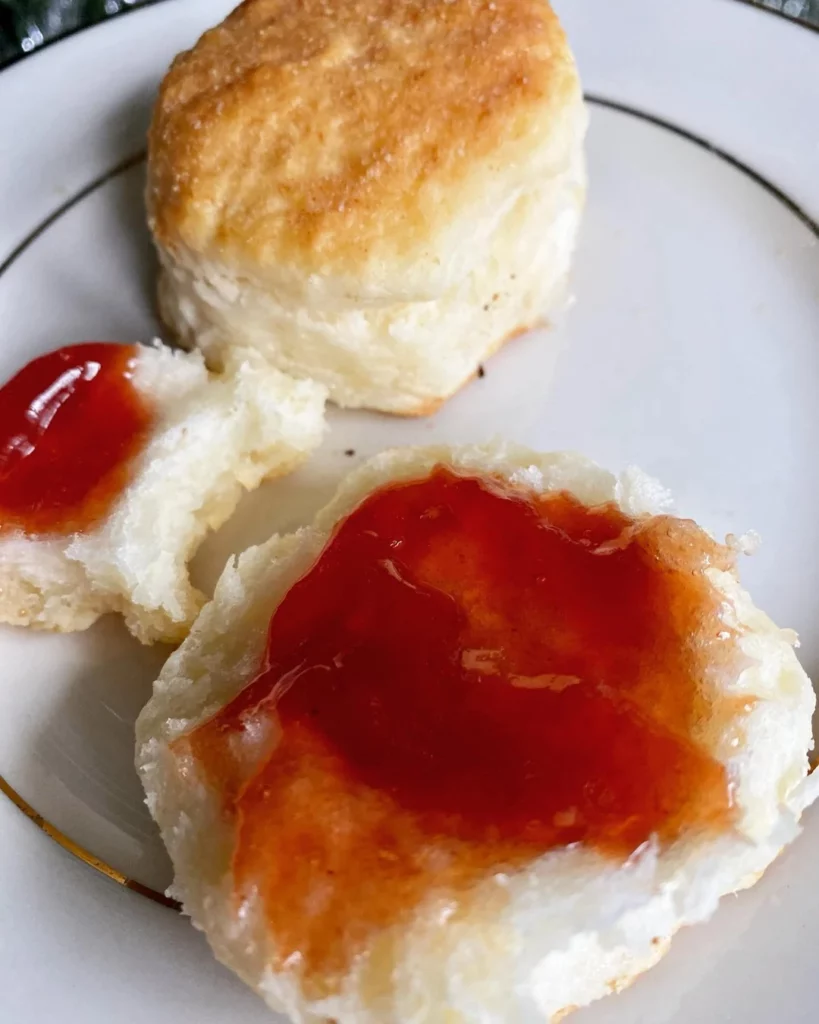
The bottoms should be nice and golden, the tops golden and glossy, while the centers should be just flaky and soft
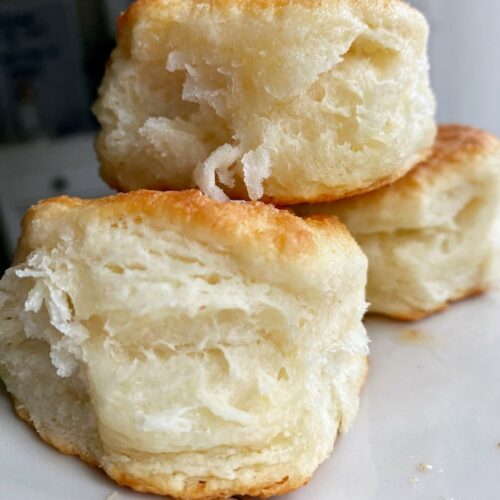
Southern Buttermilk Biscuits
Ingredients
- 2 cups all-purpose flour
- 1 tsp salt
- 2 tbsp baking powder
- ½ cup frozen unsalted butter diced
- 1 cup very cold buttermilk
- 2 tbsp honey
- Extra buttermilk for brushing
- Melted butter for finishing
Instructions
- Whisk flour, salt, and baking powder in a bowl.
- Add butter and pulse in a food processor until pea-sized, then return to a bowl.
- Stir in buttermilk and honey until just combined.
- Pat dough flat, fold over four times, and roll to 1-inch thickness.
- Cut biscuits, place touching in a cast iron skillet.
- Brush tops with buttermilk and bake at 420°F (215°C) for 15–17 minutes.
- Brush with melted butter immediately after baking.
FAQS
Can I use regular milk instead of buttermilk?
Yes, but your biscuits won’t be as tender or flavorful.
If you don’t have buttermilk, you can make a quick substitute by mixing 1 tablespoon of lemon juice or vinegar with 1 cup of milk.
Let it sit for 5 minutes before using.
Do I have to use a food processor for the butter?
Not at all. You can cut the butter into the flour with a pastry cutter, two knives, or even your fingertips.
Just make sure you work quickly so the butter stays cold.
Why do biscuits need such a hot oven?
The high heat gives the biscuits an immediate lift. It helps the cold butter release steam quickly, which separates the dough into flaky layers. A cooler oven would make them spread instead of rise.
Can I make the dough ahead of time?
Yes, but keep it chilled. You can prepare the dough, cut the biscuits, and store them in the fridge for a few hours before baking. They can also be frozen and baked straight from frozen—just add a couple of extra minutes to the baking time.
Why do the biscuits need to touch in the pan?
Biscuits bake taller and softer when they’re snug together.
Alone, they tend to spread outward. Pressed side by side, they rise upward and develop a better shape.
How do I store leftover biscuits?
Biscuits are best fresh, but you can store them in an airtight container at room temperature for 1–2 days.
For longer storage, freeze them and reheat in the oven.
What’s the secret to really flaky biscuits?
Cold ingredients, gentle handling, and folding the dough a few times. Those three things make all the difference between tough biscuits and tender, layered ones.
Also Read: Browned Butter Chocolate Chip Cookies
Leave a Reply