
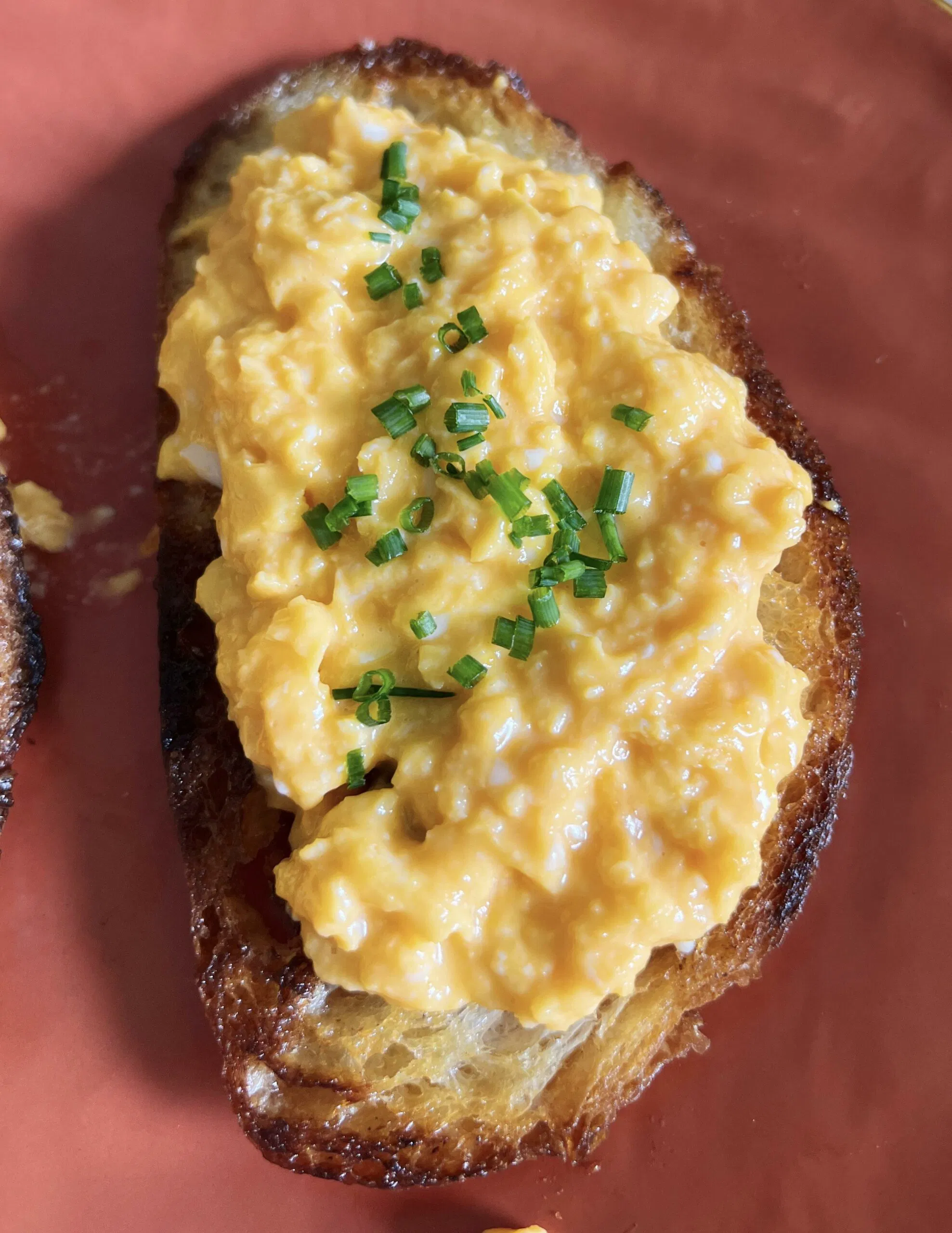
If you’ve ever bitten into scrambled eggs that were dry, rubbery, and bland, you’ll understand why this recipe feels like a revelation.
Gordon’s scrambled eggs = Simple yet Perfect
This is probably the world’s most famous egg recipe.
Inspired by Gordon Ramsay’s famous scrambled eggs technique, these eggs are soft, creamy, and full of flavor.
The magic comes not from a long ingredient list, but from a simple yet clever cooking method that transforms ordinary eggs into something you might expect from a five-star breakfast menu.
Forget about dumping milk into your eggs and whisking them.
This approach relies on gentle heat, cold butter, and patience.
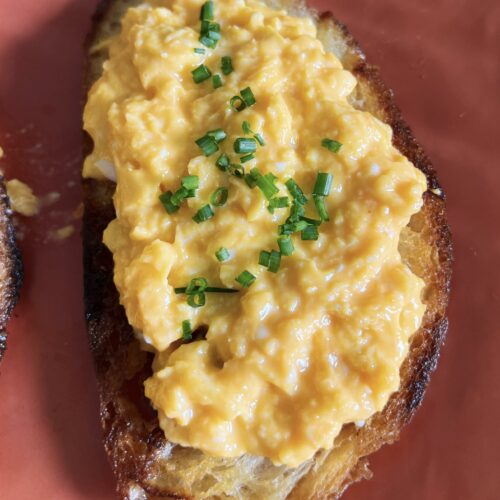
The result is velvety, rich eggs that sit beautifully on a slice of hot buttered toast.
Why You’ll Love This Recipe
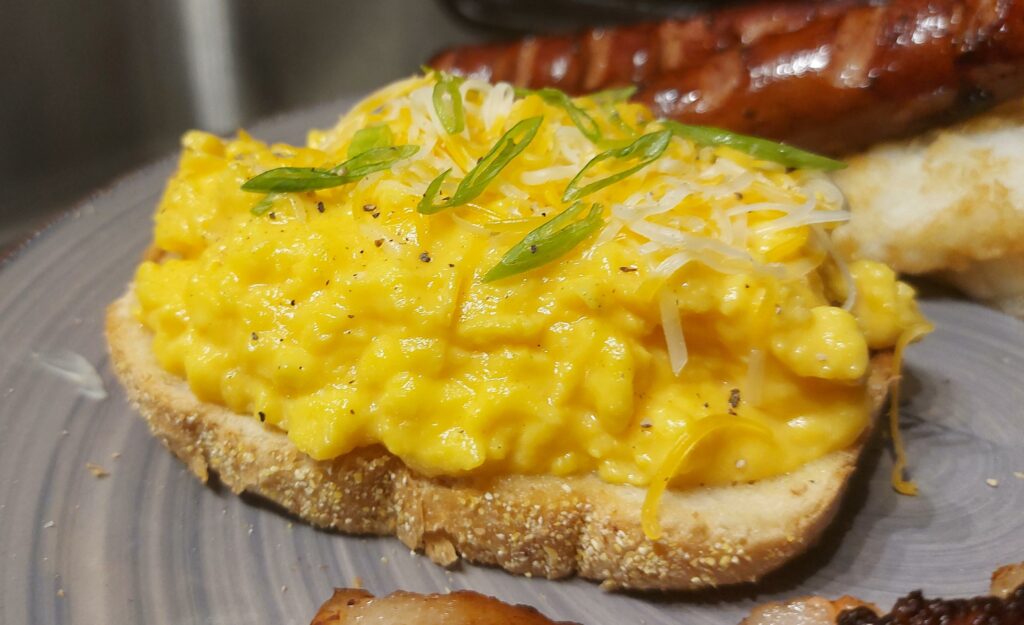
It is quite life-changing if you used to think you didn’t like scrambled eggs, then make them this way.
They are so good that ordering from a restaurant or breakfast places is unthinkable.
Most recipes, including Gordon’s fried egg, require you to preheat the pan, but this one calls for starting in a cold pan.
The most important step, according to Ramsay, is to stop them from overcooking before they change texture to rubbery
And the technique here is as simple as on and off cooking. Since eggs overcook instantly
It’s 30 seconds on heat, 30 seconds off heat until cooked. This makes them fluffy, especially folding air into them
Salt and pepper are at the end, which seems bizarre, but it’s actually smart.
If you pre-salt it will break down the eggs, and they will turn watery
Also, no pre-mixing, the eggs are mixed with cold butter while on heat to prevent them from turning grainy
Again, it’s quick to make start to finish, it’s not more than 10 minutes, including the prep
The resulting texture is silly custardy and probably the smoothest scrambled eggs
Ingredients
- 6 large eggs
- 3 tablespoons unsalted butter, cut into small cubes and kept cold
- Salt and freshly ground black pepper, to taste
- 1 tablespoon crème fraîche or plain Greek yogurt or sour cream(optional, adds tang and stops cooking instantly)
- Garnishes: chopped chives, parsley (optional)
- Toasted sourdough or brioche bread for serving
Ingredients Notes
If you don’t have crème fraîche or find it expensive, Gordon suggests using sour cream as an option.
However, sour cream is more aggressive and makes everything taste like sour cream. crème fraîche is the better of the two
If you find both give that tang, and you don’t like that either, then another good option will be plain Greek yogurt or more cold butter to stop the cooking.
And yes, butter is always the answer.
Make sure your eggs are not ice cold, but make sure you use cold butter, and it should be unsalted for said reasons.
Equipment
- Nonstick saucepan
- Silicone or rubber spatula
- Small mixing bowl
- Toaster or oven for bread
You can use a skillet, but those retain heat and can be easy to overcook. Also, Gordon recommends non-stick pans as there is no wastage from eggs sticking
Also, if you are using a pan instead of a saucepan, make sure it has high sides
Procedure
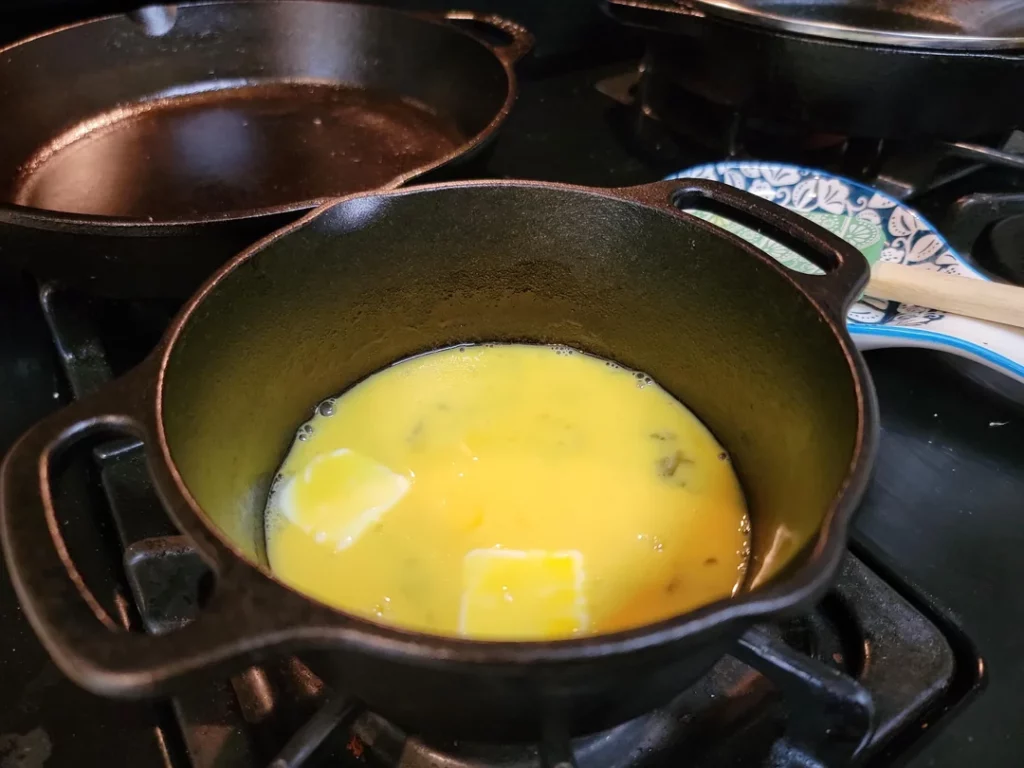
1. Start with Cold Pan and Cold Butter
Hit your eggs on a hard surface like your cutting board and directly crack into a cold nonstick pan….resist the temptation to preheat
Also, no whisking eggs before cooking them, as it turns the scramble eggs grainy.
Add the cubes of cold butter straight into the eggs.
At this stage, avoid seasoning; salt at the beginning will pull water from the eggs, giving you a runnier, less creamy result.
2. Gentle Heat and Constant Stirring
Place the pan over medium heat.
Using your spatula, stir the eggs continuously, here its all about breaking the egg yolks now….. scraping the bottom and sides so nothing sticks and bring it all to the mix.
After about 40 seconds, you will see the eggs start cooking.
Remove the pan from the heat but keep stirring and folding for 30 seconds.
This pause controls the temperature so the eggs don’t overcook.
3. Alternate Heat and Rest
Now turn the heat from medium to low
Return the pan to the stove for another short burst of heat, then take it off again.
Continue this on-off cycle for about 2-3 minutes. You’ll notice the eggs gradually thickening and becoming creamy without forming large curds.
4. Finishing Touches
When the eggs are about 90% done…they should still look a little glossy. Take the pan off the heat completely and turn off.
Stir in the crème fraîche or Greek yogurt or sour cream, or cold butter if using.
Whatever you add instantly cools the mixture, stops overcooking, and adds a subtle tang or flavor.
Season generously with salt and pepper at this stage, then fold in any garnishes you like.
Gordon himself loves fresh chives in these. Fold everything and you are done
5. Serve Immediately
Spoon the eggs over slices of warm, toasted bread.
Sourdough or brioche are perfect choices because their slight sweetness and sturdy texture complement the soft eggs beautifully.
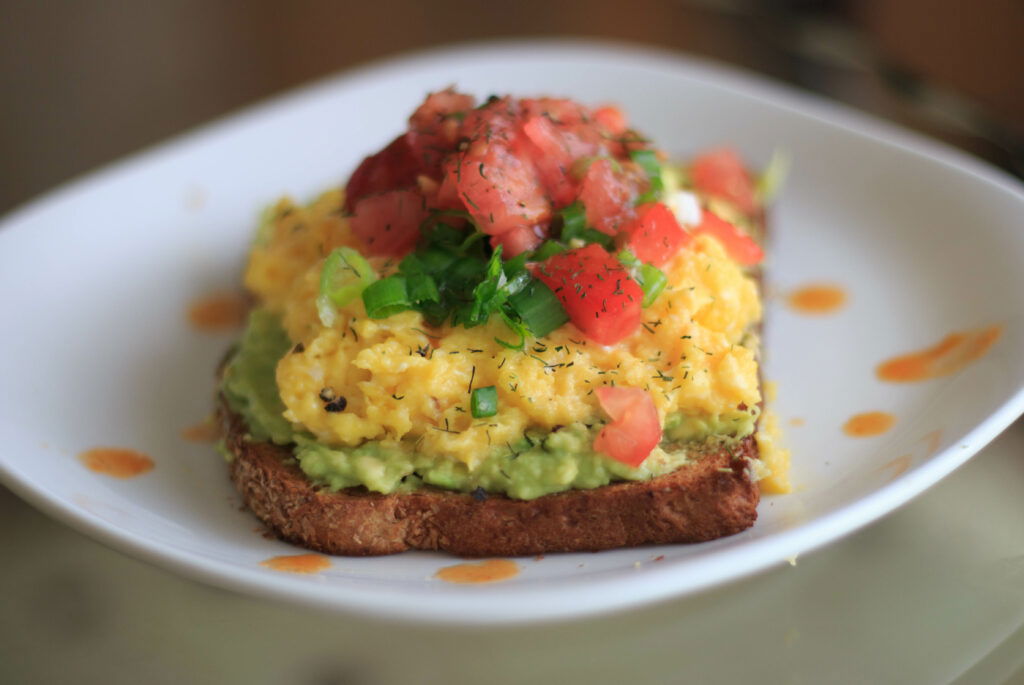
For an upscale touch, add avocado slices, grilled tomatoes, or smoked salmon.
Recipe Tips
- Cold Pan + Cold Butter – Controls heat and prevents overcooking.
- Never Stop Stirring – Keeps the texture uniform and prevents sticking.
- Season at the End – Preserves the creamy consistency.
- Don’t Rush – The on-and-off heat method is worth the extra minutes.
- Eat Right Away – These eggs are best enjoyed hot from the pan.
Serving Suggestions
- Pair with crispy bacon or sausage for a hearty breakfast.
- Add a side of roasted potatoes or sautéed mushrooms.
- Drizzle with truffle oil or sprinkle with parmesan for a gourmet touch.
Storage and Reheating
Storage: These eggs are at their best fresh, but leftovers can be stored in an airtight container in the fridge for up to 24 hours.
Reheating: Warm gently in a nonstick skillet over low heat with a splash of cream or milk, stirring constantly. Avoid microwaving, which can ruin the texture.
FAQs
What makes these eggs different from the regular scrambled eggs I make?
It’s all in the method. Cooking the eggs with cold butter over alternating heat gives them a custard-like creaminess that standard high-heat scrambling can’t achieve.
Can I skip the crème fraîche or yogurt?
Yes. They’re optional, but they help stop the cooking instantly and add a tangy flavor.
Can I make a bigger batch?
You can, but use a larger pan and stir constantly to keep the texture even.
Why no salt at the beginning?
Early salting draws out water from the eggs, which can make them watery and rubbery.
Nutritional Information (per serving):
Calories: 320 | Protein: 18g | Carbs: 5g | Fat: 26g | Fiber: 0g | Sodium: 220mg
Gordon Ramsay Scrambled Eggs
Ingredients
- 6 large eggs
- 3 tablespoons unsalted butter cut into small cubes and kept cold
- Salt and freshly ground black pepper to taste
- 1 tablespoon crème fraîche or plain Greek yogurt or sour cream optional, adds tang and stops cooking instantly
- Garnishes: chopped chives parsley (optional)
- Toasted sourdough or brioche bread for serving
Instructions
- Crack 6 eggs into a cold nonstick pan and add 3 tbsp cold unsalted butter cubes (no preheating, no salt).
- Place pan over medium heat and stir constantly, breaking yolks and scraping sides for ~40 seconds.
- Remove pan from heat and keep stirring for 30 seconds; repeat short on-off heat cycles for 2–3 minutes until creamy.
- Remove from heat when eggs are ~90% done, stir in crème fraîche/Greek yogurt/sour cream or more cold butter, then season with salt, pepper, and optional garnishes.
- Serve immediately over toasted sourdough or brioche, with optional toppings like avocado, tomatoes, or smoked salmon.
Notes
- Eggs should not be ice cold; use room temperature eggs.
- Butter must be cold and unsalted to control cooking and texture.
- Crème fraîche, sour cream, or Greek yogurt is optional but helps stop cooking and adds tang.
- Avoid salting eggs at the start; salt at the end preserves creaminess.
- Nonstick pans are preferred to prevent sticking and ensure smooth texture; high-sided skillet can also work.
- On-off heat method is essential to prevent overcooking and achieve custard-like eggs.
- Eat immediately for best texture and flavor.
Also Read
Scrambled Eggs with Cottage Cheese
What’s the Truth About Eating Raw Eggs?
Leave a Reply